

CPR Manikin and AED: Usage, Price, and Buying Guide

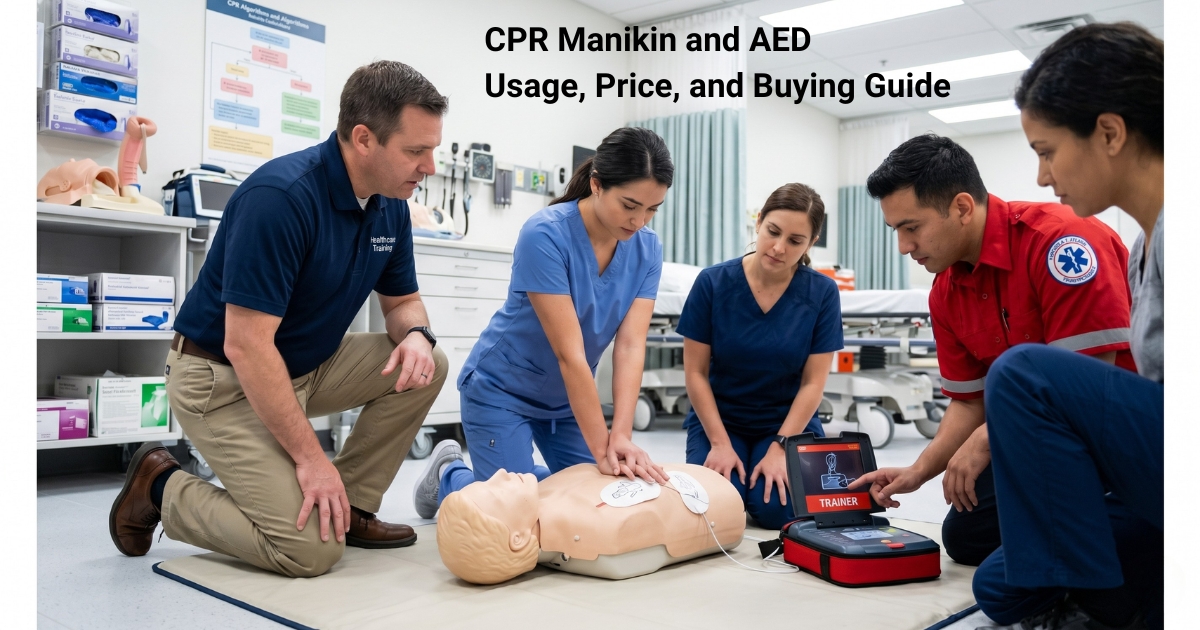
When a cardiac emergency strikes, survival depends on the fast and accurate response of trained individuals. Knowing how to perform cardiopulmonary resuscitation saves lives every single day. However, reading a textbook is never enough. Real confidence comes from hands on practice with a quality CPR Manikin and AED.
Proper training tools build muscle memory and improve response times. Hospitals, medical colleges, and training institutes invest in these specific tools because practical experience is mandatory for healthcare professionals. A well made CPR Manikin allows students to practice chest compressions and rescue breathing in a safe and controlled environment.
Choosing the right equipment can feel overwhelming with so many options available. This guide will walk you through everything you need to know about purchasing the best tools for your program.
What is a CPR manikin?
A CPR manikin is the foundation of any life support class. These anatomical models replicate the human chest and respiratory system. The primary purpose is to give students a realistic feel for chest compressions and rescue breathing.
Instructors use a CPR training manikin to teach basic life support and advanced cardiac life support. A good model mimics the exact resistance of a human chest. This teaches students how hard and how deep they need to press to keep blood flowing to the brain during cardiac arrest.
Many people casually refer to this tool as a “CPR dummy.” While the term is common, modern models are far from simple dummies. Today, they come equipped with clicking mechanisms that sound when a student reaches the correct compression depth. More advanced models connect to apps to provide real time feedback on compression speed and depth.
You will find different types available on the market. There are adult, child, and infant models. Having access to all three sizes is crucial because the resuscitation technique changes depending on the age and size of the patient.
What is an AED trainer?
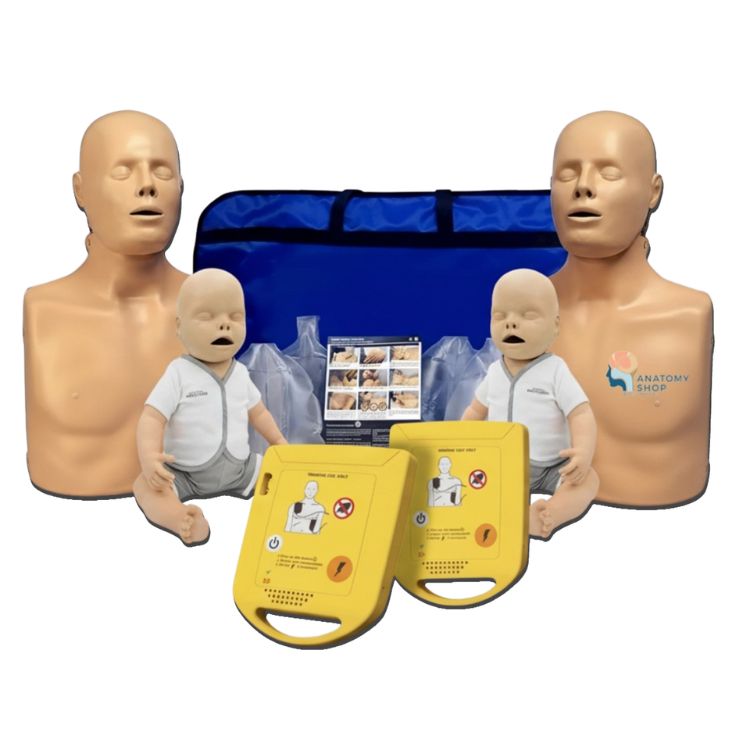
Using a defibrillator is a critical step in the chain of survival. An AED Trainer is built specifically for classroom use. It looks and behaves exactly like a functional automated external defibrillator, but it does not deliver a live electric shock.
These tools teach students how to turn on the device, apply the adhesive pads to the chest of a CPR manikin, and listen to the voice prompts. The voice prompts guide the student through analyzing the heart rhythm and pressing the shock button.
There is a major difference between a real defibrillator and an AED Trainer. A real device analyzes a real patient and delivers a lifesaving shock. An AED Trainer is strictly a teaching tool. Practicing with an AED Training Device removes the fear of the unknown. When students practice repeatedly with an AED training device, they build the confidence needed to act quickly during a real emergency.
Why is CPR training important?
Cardiac emergency situations can happen anywhere. They happen in homes, offices, shopping malls, and on the street. When a person collapses from cardiac arrest, every minute without help decreases their chance of survival. Immediate intervention keeps oxygenated blood moving to vital organs.
Healthcare training relies heavily on hands on practice. Nursing education programs and medical college training centers dedicate countless hours to mastering these skills. A nurse or a doctor must be able to perform perfect compressions under extreme stress.
This training extends far beyond the hospital walls. Workplace safety programs now require basic life support certification for factory workers, teachers, and security guards.
Consider a real world example. A construction worker collapses on a job site. If a coworker has practiced on a CPR training manikin, they know exactly where to place their hands and how to coordinate with someone bringing an AED Trainer. That immediate action bridges the gap until paramedics arrive.
How Does a CPR Manikin Work?
A CPR manikin is engineered to replicate human anatomy. When a student places their hands on the chest and pushes down, springs or internal bladders provide realistic resistance. This chest compression practice helps the learner understand the physical effort required to pump the heart manually.
Rescue breathing practice is another key component. A high-quality CPR manikin features a tiltable head and a realistic airway. The student must properly tilt the head and lift the chin to open the airway before delivering a breath. If the airway is closed, the breath will not enter the lungs. When done correctly, the chest visibly rises and falls.
Many modern units include built-in feedback systems. These might be simple clicking sounds that confirm the correct compression depth. Advanced models use LED lights or connect to tablets to show instructors exactly how fast and how deep each student is compressing. This takes the guesswork out of grading and ensures everyone masters the technique.
CPR Manikin, Child and Infant CPR Manikin & Birth Simulator Price in Bangladesh
| Product Category | Model Type | Price Range (BDT) |
|---|---|---|
| CPR Manikin (Adult) | Basic Model | ৳95,000 – ৳180,000 |
| CPR Manikin (Adult) | Electric with Monitor | ৳145,000 – ৳280,000 |
| Child CPR Manikin | Basic Model | ৳90,000 – ৳160,000 |
| Child CPR Manikin | Electric with Monitor | ৳180,000 – ৳260,000 |
| Infant CPR Manikin | Basic Model | ৳80,000 – ৳150,000 |
| Infant CPR Manikin | Electric with Monitor | ৳190,000 – ৳250,000 |
| Birth Simulator (Delivery Manikin) | Standard Training Model | ৳120,000 – ৳250,000 |
Note
Prices may vary depending on brand, training features, monitor system, accessories, software integration, and product availability. For the latest pricing and specifications, contact Aleef Surgical.
Budgeting for your classroom means understanding the CPR manikin price market. You should never pick a model based on a fake or guaranteed price, as costs fluctuate based on shipping, taxes, and technology updates. Instead, you must understand what drives the CPR manikin price up or down.
Basic models are affordable and lightweight. They are perfect for community classes where large groups of people need to learn the basics quickly.
Advanced feedback models cost more. These include Bluetooth connectivity, LED speed monitors, and detailed anatomical landmarks. The increased CPR manikin price is worth it for professional certification courses where exact metrics are required.
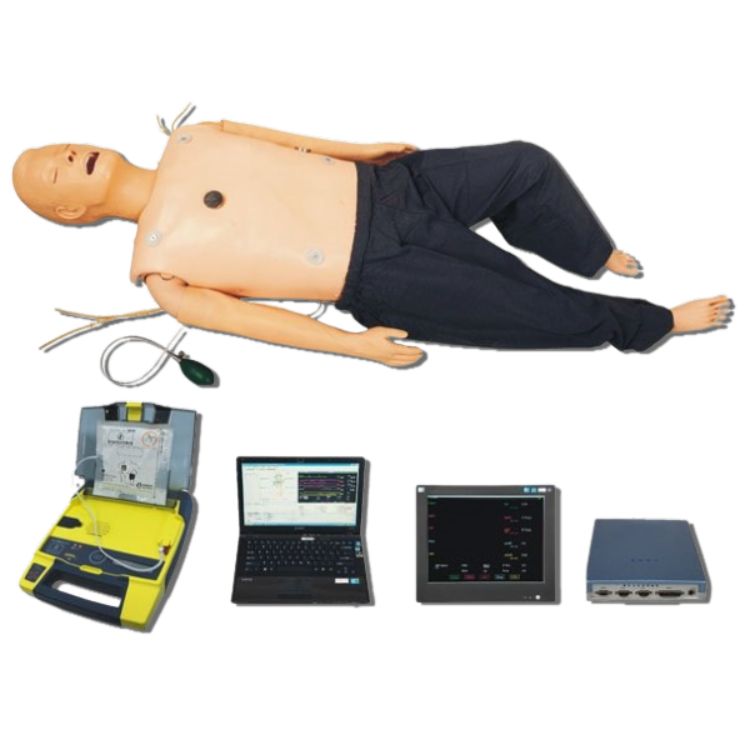
Professional training models are the most expensive. These are full-body units used in advanced trauma life support scenarios. They might include features for IV insertion, intubation, and realistic heart rhythms.
Which CPR Manikin Should You Buy?
Your specific needs dictate which CPR Manikin is right for your organization.
Hospitals: You need heavy duty Medical Training Equipment. Look for full body models with advanced airway management and real time digital feedback.
Nursing Institutes: A high quality CPR Training Manikin with a clicking feedback mechanism is ideal. You want something durable that can handle hundreds of nursing students each semester.
Medical Colleges: Similar to hospitals, medical students need precision. Invest in models that offer detailed performance analytics.
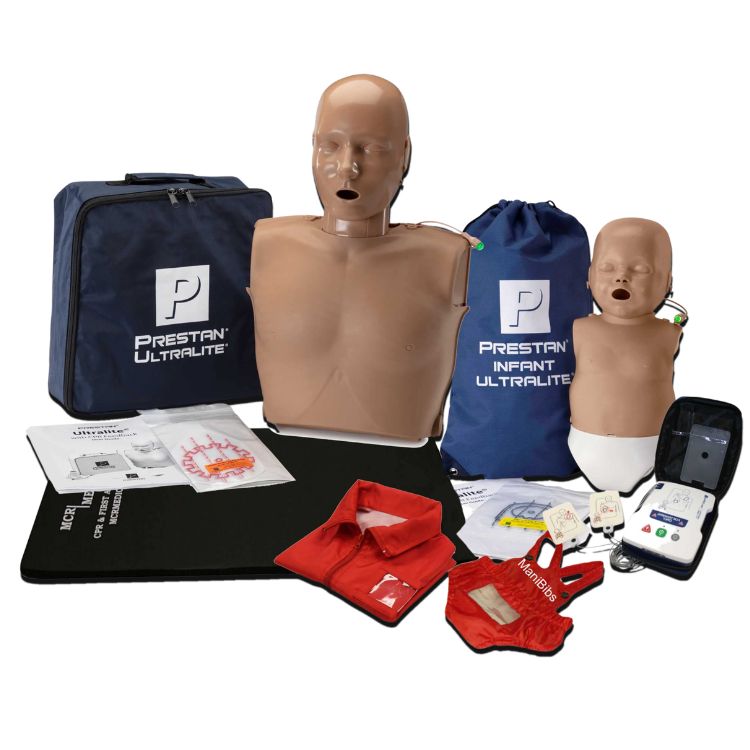
Emergency Response Training Centers: You need rugged and portable CPR Training Equipment. You should buy multipacks that include adult, child, and infant sizes.
Individual Trainers: If you travel to different offices to teach, portability is key. Look for lightweight models that come in protective carrying bags.
Features to Look for Before Buying
Before you invest in any CPR Training Equipment, evaluate the core features.
First, look for realistic anatomy. The model should have a distinct sternum and rib cage so students can practice finding the correct hand placement.
Compression feedback is no longer optional for most certification boards. Ensure the model has at least a basic clicker or an advanced light system to measure depth and speed.
AED compatibility is crucial. The skin material should allow the adhesive pads of an AED Training Device to stick properly and be removed without leaving a sticky residue.
Durable construction ensures your investment lasts for years.
Finally, check for easy maintenance and replaceable components. A good CPR Training Manikin will have easy to change lung bags, removable faces for sanitization, and replaceable chest skins.
Where to Buy CPR Manikin in Bangladesh?
When you need reliable CPR Training Equipment, Aleef Surgical is a trusted partner.
We prioritize product quality above all else. Every CPR Manikin and AED Trainer we supply is rigorously tested to ensure it meets the demands of modern medical education.
Our customer support team understands the unique needs of healthcare educators. We do not just sell boxes. We help you build a complete training environment.
We maintain a large inventory of training equipment availability. Whether you need a single infant model or fifty adult models for a new medical college, we can fulfill your order promptly.
With years of healthcare industry experience, Aleef Surgical provides the insights and the tools you need to train the next generation of lifesavers.
Frequently Asked Questions
What is a CPR Manikin used for?
It is used to teach people how to perform chest compressions and rescue breaths during a cardiac emergency. It provides a safe, realistic way to practice life support skills.
How often should CPR manikins be replaced?
With proper care, a high quality model can last five to ten years. You will need to replace consumable parts like lung bags and face shields frequently, but the main body is built to last.
Can beginners use a CPR Manikin?
Absolutely. They are designed specifically for learners. Beginners use them in community first aid classes to build basic skills.
What is the difference between a CPR Dummy and CPR Manikin?
There is no functional difference. “CPR Dummy” is simply a casual term used by the general public. Medical professionals and educators use the term “manikin”.
Is an AED Trainer necessary?
Yes. Using a defibrillator is a mandatory part of modern basic life support. An AED Trainer teaches students how to use the device safely and quickly.
Are CPR Manikins reusable?
Yes. They are highly reusable. After a class, instructors sanitize the faces and replace the internal lung bags to ensure the equipment is hygienic for the next student.
Which model is best for nursing institutes?
Nursing institutes should choose a model with integrated feedback. This ensures nursing students achieve the exact compression depth and rate required by medical guidelines.
How do I maintain a CPR Training Manikin?
Wipe down the exterior with approved sanitizing wipes after every use. Change the lung bags regularly. Store the equipment in a dry, cool place inside a protective bag to prevent dust buildup.
What features matter most when buying?
Realistic chest resistance, visible anatomical landmarks, clear compression feedback, and easily replaceable parts are the most critical features.
Where can I buy quality CPR Training Equipment?
You can purchase premium training tools directly from Aleef Surgical. We supply hospitals, colleges, and independent instructors with durable, high quality models.
Conclusion
Cardiac emergencies require swift, confident action. That confidence is built entirely on the foundation of hands on practice. Investing in the right CPR Manikin and an accurate AED Trainer is the best way to prepare students for real world medical crises.
Whether you are equipping a massive medical college or starting a small community training business, your tools matter. Pay close attention to durability, realistic feedback, and long term maintenance. Avoid the mistake of shopping purely based on the lowest CPR Manikin Price. Instead, focus on the value and reliability of your CPR Training Equipment.
Take the time to evaluate your classroom needs. Review the comparison tables and features outlined in this guide. When you are ready to upgrade your facility, explore the reliable and professional options available at Aleef Surgical. Your students deserve the best practice tools, and their future patients are counting on it.

 First Aid Kit and Safety